Thursday, 25 September 2014

The Theories Of Goodwin
The Theories Of Goodwin
The screenshot bellows are little parts taken from Andrew Goodwin's Dancing In The Distraction Industry, Chapter 4: The Structure of Music Video - Rethinking Narrative Analysis. They describe the terms Illustration, Amplification and Disjuncture in quite a detailed way while also naming a few examples of where they are witness, which I have also attached to the blog.
Illustration (Images Match):


Wednesday, 24 September 2014
Why Use Promo's?
Why Use Promo's?
Originally, the whole purpose of creating Music Videos was so that artists could sell their albums. A lot of money was pumped into making music videos just so artists could sell they're albums, therefore the quality of the music video was very important. Now that the Music Industry has slowly changed over time it means music videos are not of the highest concern anymore. Therefore the colossal amount of money that would of been spent on a music video in the past, wouldn't be spent on a music video nowadays - this is due to the fact that the music industry focuses on delivering singles rather than a lot of albums.
Now that the audience doesn't see Pop Promo's as the most important thing anymore, it still doesn't mean that less time is taken in creating them. Directors of music videos still take the time to create a story which is expressed through the music video and the music itself. Different Directors create different Pop Promo's because not every song is the same; every song creates a different story to be told through the music video and therefore there are a multitude of ways in which you can create a Pop Promo so that it goes with a particular song.
Sales Promotion's has its advantages over the typical advertising that you would normally see, and these are quite relevant to smaller businesses. One of these advantages being that Promo activity can be targeted more specifically compared to other forms of advertising. Another advantage is the fact that certain promotional campaigns can be measured quite easily and therefore make them more available and the activity can therefore be accurately evaluated. It is common for a lot of smaller bands to use Promo's so that they can boost the awareness of their band, and this can be done through a variety of ways which can quickly make a small band become big in a minimal amount of time.
Sales Promotion's has its advantages over the typical advertising that you would normally see, and these are quite relevant to smaller businesses. One of these advantages being that Promo activity can be targeted more specifically compared to other forms of advertising. Another advantage is the fact that certain promotional campaigns can be measured quite easily and therefore make them more available and the activity can therefore be accurately evaluated. It is common for a lot of smaller bands to use Promo's so that they can boost the awareness of their band, and this can be done through a variety of ways which can quickly make a small band become big in a minimal amount of time.
Who Makes Music Promo's?
Who Makes Music Promo's?
Independent Record Label (Indie Record Label):
An independent record label is a record label which operates without the funding of or outside the organizations of the major record labels. The majority of upcoming bands and musical acts begin on independent labels simply because they haven't been noticed or recognised by the Big Media Institutions/Big Media Record Labels.
A lot "independent" labels are started, and occasionally run, by major label artists but are still owned by the major label "parent". These subsidiary labels are also regularly referred to as vanity labels or "boutique labels". They're job is designed to satisfy established, powerful artists and/or to give them freedom or "elbow room" in discovering and promoting new talent.
Record companies and music publishers that are not under the control of the "Big Three", in this case The Big Three are Universal Music Group, Sony Music Entertainment & Warner Music Group - all of which have their own subsidiary arms, are generally basically considered to be "Indie", even if they are large corporations with complex structures. Some people regard an Indie Label as any label that releases non-mainstream music, regardless of its big/small corporate structure.

Major Record Labels (Big Three):
The Big Three consist of...
- Universal Music Group
- Sony Music Entertainment
- Warner Music Group


The Major Record Labels are often under the control of a corporate umbrella organisation which is called a "music group". These music groups are typically owned by an international conglomerate "holding company", which doesn't simply have music divisions, but also non-divisions as well. A music group also controls and consists of music publishing companies, sound recording/record manufacturers, record distributors, and record labels. Back when there was the "Big Four" in 2007, music groups controlled about 70% of the world music market, and about 80% of the United States Music Market. Record companies may also comprise what is called a "record group" which is, in turn, controlled by a music group. The constituent companies in a music group/record group are sometimes marketed as being "divisions of the group".

Thursday, 4 September 2014
Editing Exercise

Editing Exercise
This 'parody' music video may not look like anything special, but the actual process of editing the little 58 second piece required a lot of time and effort. My group took it in turns during the editing process and all got to familiarise ourselves with new functions within the Editing Software, markers in particular. We also utilized other skills which I and my group have learned throughout our time in Media over the past few years.
We took screenshots throughout the lessons we were editing just to show that the editing process wasn't particularly simple and easy but rather quite a complex piece to create. We created the Parody Music Video using Adobe Premiere Pro CS6.


http://www.premiumbeat.com/blog/markers-in-premiere-pro/
http://a2klsmediadepartment.blogspot.co.uk/2014/08/task-practicing-using-editing-skills.html
The above links helped me incorporate markers into the finished video featured at the top of the blog. I and my group had never used them before but they proved to be very helpful because instead of scrolling through all our footage to find a specific part, we would simply place a marker at the point we needed and whenever we wanted to go back to it we would click on the marker and it would take us back to the desired place. It was a very useful aspect of Adobe Premiere Pro CS6 which I hadn't used before but will continue using in the future.
Wednesday, 3 September 2014
Music Video Styles
Music Video Styles
Performance Based Videos:
In relation to the music industry, there are 3 different styles of music videos which each music video will fall into. The first one being 'Performance' Based Videos which feature the artist, band or group performing the actual song featured in the music video throughout the whole of the video. This is a fairly easier Music Video Style and probably the most suitable if you have a low budget. All you need to do is get a suitable location for filming. A good example of a Performance Based Video is 'Reptilla' by The Strokes. The whole music video consists of the band, The Strokes, performing the song through a series of Close-Ups. Due to the Music Video only focusing on fast-paced body part shots throughout the video, through the use of Close-Ups, it means they can make a lengthy video which is simple but effective - the pace of the shots keeps up with the pace of the music allowing the video to flow along with the music.
Performance Based Videos can be very simple, as shown in my recent example, and with creative thinking you can carry your band on to shoot an iconic music video, no matter how simple. This can in turn show a whole new different side of your band to your fans.
Other examples of Performance Based Videos are listed below...
Other examples of Performance Based Videos are listed below...
Narrative Based Videos:
A 'Narrative' Based Music Video on the other hand contains footage which attempts to tell a story through the course of music video. The video can involve actors, or even the actual band members, and the story is always somehow linked to the lyrics of the particular song - this is not however the case in all Narrative Based Music Videos. If a song is featured within a movie then the music video for it is likely to be Narrative Based as you will see certain scenes from a movie cut into the music video itself. A good example of this is 'I Don't Want To Miss A Thing' by Aerosmith, which is featured in Armageddon - scenes from the film are incorporated into the music video giving it that underlying Narrative.
Other examples of Narrative Based Videos are listed below...
Concept Based Video:
Lastly is the 'Concept' Based Video and this is a style of music video that is based solely around a single idea or, as the name suggests, concept. These particular music videos can be quite unusual compared to the both the Narrative Based and Performance Based Videos because they tend to utilize a particular editing/filming technique. A Concept Based Video is probably the least likely music video which you are going to see as its not often you get a purely conceptual music video due to the Music Industry and the Commercial World demanding things to be a bit more accessible, much like the other two Music Video Styles. These types of music videos are usually simple ideas that have essentially been developed and will have no actual relation to the music or lyrics of the song. Arctic Monkeys' 'R U Mine?' is a good example of a Concept Based Video because as I mentioned it utilizes a particular editing and filming technique and the music video has little to no relation to the music and lyrics.
Other examples of Concept Based Videos are listed below...
Tuesday, 2 September 2014
History of Pop Music
History of Pop Music
The Invention of the Gramophone (1877):
Thomas Edison invented the phonograph, also known as the Gramophone in its later forms, in 1877. Unlike the Phonautograph, which was patented by Léon Scott in 1857, it was capable of both recording and then reproducing the same sound.

The First Film With Sound (1927):
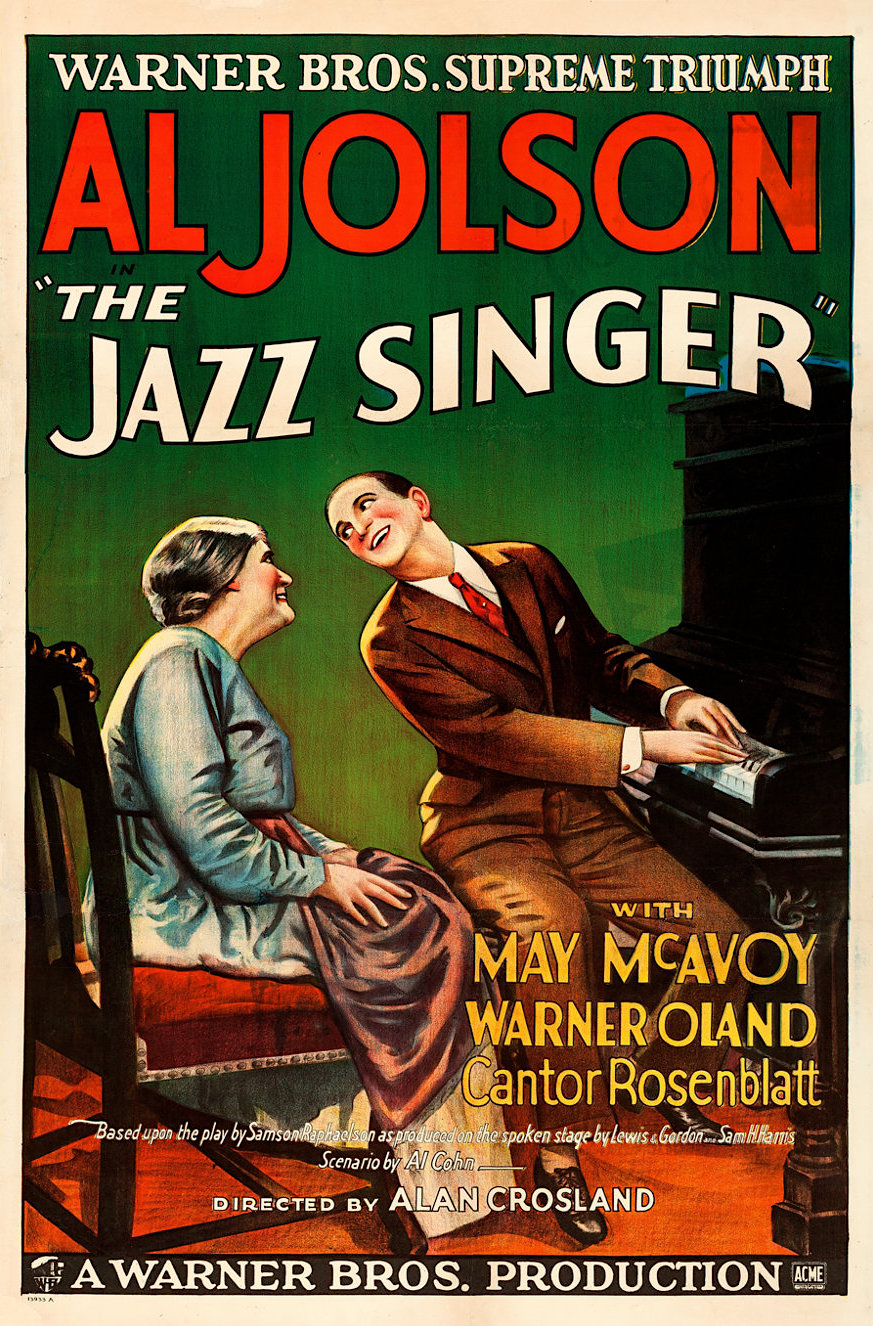
The first feature-length motion picture with synchronized dialogue sequences was The Jazz Singer (1927), from its release ascended the "talkies". Released in October 1927 The Jazz Singer was a major hit. It was made with Vitaphone, which at the time was the leading brand of sound-on-disc technology. Sound-on-film, however, would soon become the standard for talking pictures.
MGM Musicals (1940s):
After 1940, production at MGM was cut from 50 pictures a year down to 25 features per year. During this time, MGM released very successful musicals with players such as Judy Garland, Fred Astaire, Gene Kelly, and Frank Sinatra.

Elvis Presley (1950s-60s):
Elvis Aaron Presley was an American singer and actor born in 1935. Regarded as one of the most significant cultural icons of the 20th century, he is often referred to as "the King of Rock and Roll" & "the King". 'Rock and Roll' is a genre of popular music that originated and evolved in the United States, derived from a combination of African-American genres such as blues, jump blues, jazz, and gospel music, together with Western swing and country music.

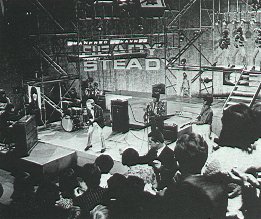
The First Ever UK Music TV Programme ‘Ready Steady Go!’ (Mid 1960s):
'Ready Steady Go!' was a British rock/pop music television programme, and first of its kind, which used to air every Friday evening in the Mid-1960s. It was conceived by Elkan Allan, head of Rediffusion TV.
Top of the Pops (1964):
'Top of the Pops' or TOTP, was a British music chart television programme which was made by the BBC. Originally TOTP was broadcast weekly between 1 January 1964 and 30 July 2006. Each weekly programme consisted of performances from some of that week's most popular music artists. Also a rundown of that week's singles chart was went through.

Queen - Bohemian Rhapsody (1975):
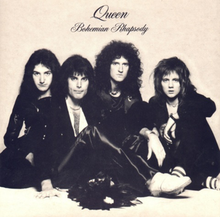
Bohemian Rhapsody was written by Freddie Mercury in 1975 for Queen's album 'A Night at the Opera'. Bohemian Rhapsody has no chorus but instead consists of several sections. Including a ballad segment ending with a guitar solo, an operatic passage, and a hard rock section. Bohemian Rhapsody was the most expensive single ever made at the time.
The Launch of MTV (1981):
On August 1st 1981 MTV (Music Television) went on the air for the first time ever, with the words “Ladies and gentlemen, rock and roll.” ’ “Video Killed the Radio Star” by the Buggles was the first music video to air on the new cable television channel, which at the time was only available to households in parts of New Jersey.

Michael Jackson’s ‘Thriller’ (1983):
Michael Jackson's Thriller is a 13-minute music video for the song of the same name released on December 2, 1983. It was MTV's first world premiere video and it was voted as the most influential pop music video of all time. It was named "a watershed moment for the industry" for its merging of film-making and music.

VH1 (1985):
VH1 is an American cable television network based in New York City. It was launched on January 1st 1985, in the old space of Turner Broadcasting's short-lived Cable Music Channel. The original purpose of the channel was to build on the success of MTV by playing music videos, but targeting a slightly older demographic than its sister channel, focusing on the lighter, softer side of popular music.

MTV Europe (1987):
MTV Europe is a 24-hour entertainment cable and digital television network which was launched on August 1st 1987. To start with, the channel served all regions within Europe being one of the very few channels that targeted the entire European continent. Nowadays however, the channel only serves a selection of European countries because MTV Networks Europe began to regionalise its network in 1997.

Madonna’s ‘Vogue’ by the Influential Director David Fincher (1990):
"Vogue" is a song by American singer-songwriter Madonna from her soundtrack album, I'm Breathless. It was released as the first single from the album on March 20, 1990, by Sire Records. The music video for "Vogue" was directed by David Fincher and it was shot in black-and-white. It takes the stylistic inspiration from the 1920s-30s.

R.E.M. with ‘Everybody Hurts’, directed by Jake Scott, wins best director award (1992):
Everybody Hurts is a song by R.E.M. which was originally released on R.E.M.'s album Automatic for the People in 1992, but then it was released as a single in 1993. It peaked at number twenty nine on the Billboard Hot 100, and then peaked within the top ten of the charts in Canada, Australia, the United Kingdom, Republic of Ireland and France.

Fatboy Slim with ‘Praise You’ wins best director award for the influential Spike Jonze (1999):
Fatboy Slim's 'Praise You' was released as the third single from his second studio album called 'You've Come a Long Way, Baby'. Praise You reached number one on the UK Singles Chart, number two in Belgium, number four in Canada, number six in the Republic of Ireland and then number thirty six in the United States. The video for "Praise You" was directed by Spike Jonze.

EMAP launched 4 music channels in the 1990s. Other channels were soon to follow (BskyB, The Vault and Classic FM and nine channels from Viacom who developed MTV). BSkyB is a British satellite broadcasting, broadband and telephone services company, with operations in the United Kingdom and Ireland. The Vault is a British music channel owned and operated by CSC Media Group. This amount of channels created fragmentation resulting in MTV getting sponsorship to launch their own programmes.
Subscribe to:
Posts (Atom)