Wednesday, 31 December 2014

Shooting Schedule (Created By Stefano Towell)

Shooting Schedule (Created By Stefano Towell)

For our music video me and the rest of my group have to come up with a schedule before hand to keep up with deadlines and to make everything easier when organising. We plan on starting filming the performance part of the video on the week begging the 17th November as we believe that this stage is an important one to do first due to it being the base of the video as we will show us playing the instruments on the choruses of the songs we include as well as clips during the verses. We have all decided what we will be wearing as well as the lighting which can be seen in our other Pre-Production blogs. It will be filmed in the drama studio of our school.

The performance stage of filming should take no longer than a week as we have already learnt our lines as well as being able to keep in time with the song on the instruments we will be playing including guitars and drums. The next stage will be the start of the song that will be filmed in the Kings Langley woods as the lighting within it will be very beneficial and will give a good effect to the video. This part of filming should commence the week following on the 24th November. We plan to finish filming as well as the lions share of the editing by Christmas as we do not have much time after to complete it as well the blogs to go with it. It is a tight deadline however with a fixed schedule, it should make the process easier as well as smoothly run which is something needed for this production if we want an impressive outcome.

Equipment List (Created By Stefano Towell)

Equipment List (Created By Stefano Towell)

As part of our Pre-Production, me and my group have to write up 10 blogs that explain our forgoing production that will take place including where it will be shot, equipment, shot lists and more. For this post I will be discussing the equipment we will be using for our filming. 

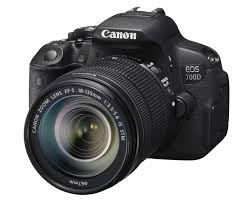
Our min piece of equipment that will be needed at all times is the Canon 700D camera that shoots very high quality video s well as being able to take very high resolution images. The camera will be used in a variety of different ways, be used in many different shot angles as well as capturing our entire music video. An important piece of equipment to go with the camera is the tripod as for the music video to get it to look as professional and well shot as possible, the camera needs to be stable with no shaking present and that is something the tripod can do very well. We are trying to get hold of a dolly as well which are a set of wheels to go underneath the tripod however if there isn't one available that i fully working, we will have to do without it. The dolly can help us do tracking shots which would be very helpful in our music video as part of it involves us as a group walking with the camera tracking us and the dolly would be able to capture the footage with no shaking or resistance.

The SD memory card is somewhat a very important piece of equipment as it stores all of the footage we take with the camera and then is transferable to the computer for editing. Without this card, there wouldn't be any footage to upload making the project significantly more difficult.

Items such as the computer are very important pieces of equipment that are not really considered front line' however it is extremely important as all of the editing, trimming and effects are used on the footage to create our final production to upload onto our blogs. Adobe Premiere Pro is the editing software we use as it is very good for what is needed in this project with multiple effects to choose from ,the ability to trim and merge videos and much more to create a top quality production.

Other forms of equipment include the lighting and umbrella which will be used to enhance our production, particularly inside however much of the filming will take place outside where natural lighting will be good enough for shooting. Inside shots such as the performance video.


Overall we do use a wide variety of equipment to make our production reach its full potential. Equipment such as the high quality camera and the editing software are the main two pieces which will benefit us the most with making our music video.


Prop and Costume List (Created By Connor Crosby)

Prop and Costume List

Summary of Star (Created By Connor Crosby)

Summary of Star

Location Recce (Created By Daniel Bruce)

Location Recce (Created by Daniel Bruce)


Shot List (Created By Daniel Bruce)

Shot List (Created By Daniel Bruce)

Risk Assessment (Created By James Ellis)

Risk Assessment (Created By James Ellis)

Langley hill, as addressed in the name, is positioned on a large hill as a result suitable footwear would be needed at all time to reduce the chance of any slips or injuries occurring whilst on set which could potentially harm our chances of creating a production which is to our full capability.

Kings Langley Common includes a woods which is a vital part to our production. There are many risks which can occur whilst in a woods, most notably, the large amount of tree debris situated around the environment so carefulness is vital to the production. To reduce the chance or any injuries we will produce a clear path, which will be easily used by the actors without the risk of injury.

One risk that we will be encountering is that of pedestrians and others in the local community. To ensue that everyone involve stays safe and can conduct the production successfully, we shall be filming when there are no pedestrians present. There may be others in the background that may appear to be people in the local community, but we can ensure that these are highly trained actors which are positioned for nothing but effect in the production.

Another risk for our production the instruments which could pose some distress with the weight of them, if carried for a long period of time at once. It is important that the instruments are used correctly and appropriately to ensure that there is no damage done to both the instruments but more importantly the individuals in the production.

As we are using amps for the production, there will be some wire hazards that could cause some concern. It is possible for anyone in the production process to trip over these wires and cause harm. Furthermore, to eliminate this hazard, we will be taping down the wires to the floor, with luminous tape therefore, they will be very clearly visible.

Storyboard (Created By James Ellis)

Storyboard (Created By James Ellis)
 

Tuesday, 30 December 2014

Analysis Of Magazine Posters and Digipaks

Analysis Of Magazine Posters and Digipaks

Skype Call With Ian Haughton (Handsome Design)

Skype Call With Ian Haughton (Handsome Design)

During one of our media lessons our media class had a Video Skype call with Ian Haughton of Handsome Design. We spoke about quite a variety of aspects related to the Design and Marketing of Digipaks and Magazine Posters and of course the process through each of these go through when being made public. Our class devised a list questions which we were actually able to personally ask Ian, who was an expert at what he does, and this can be seen in the embedded YouTube video.


This interview has given myself and my group essentially what is needed in terms of the Digipak and Magazine Poster and also the do's and don'ts which I found very helpful and also influential in the Ancillary Task of actually creating our groups Digipak and Magazine Posters. We were able to grasp all the key components Ian was telling us and he also gave his own opinion on certain subjects and conveyed particular past experiences he had encountered which I feel helped everyone, as well as my group, because it showed me that he knew what he was talking about and therefore everything he was saying was very useful information which we should be taking note of and channeling into our own Digipaks and Magazine Posters which I feel our group did.

Photographs Of Filming And Editing

Photographs Of Filming And Editing

Before actually filming the required scenes in the Drama Studio, at our school, we had to set the scene and make sure everything was right for filming and set up how we pictured it - this including the backdrop, lighting and placement of instruments. We all had a group input on what lights we thought should be used but ultimately the decision came to the Daniel, our Director, and he made all the right decisions to ensure our set was very aesthetically pleasing and borderline professional.

Since our AS work, and even our GCSE work, the editing skills within our group has drastically increased - the productions we have recently created and certain scenes we have filmed and edited tell us this. We have chosen to stay with the same editing software, Adobe Premiere Pro CS6, throughout the course of this but ultimately our knowledge of the software we are using and what we can achieve through it has enhanced massively. We took full advantage of what we have learned in other lessons and have been using our new found knowledge within the editing process of our music video - markers is probably the main one we have been using as we find it is very helpful to keep track of certain points which may otherwise be very hard to find if you ever wanted to edit that particular piece again.


Images of Ancillary Task Editing

Images of Ancillary Task Editing

The images below have been taken during the Editing process of our Ancillary Task in terms of creating our Digipak and Magazine Poster - we are using Adobe Photoshop CS6 and we are aiming to highlight the complexity of our editing skills. After researching real Digipaks and Magazine Posters we tried our best to include all the common features that were included in the certain ones we looked at so that we could make it as authentic as possible and make it look like it was made by professionals within the music industry. We included our own record label 'BCES Productions', which we originally created to serve as the Production Company for our AS Thriller Opening Sequence, and we have also included a QR Code which enables consumers of the poster to scan the code and be directed straight to Daniel's Blog which will then allow them to understand the band in thorough detail while also following the process of our A2 Music Video.


Reply From Record Company

Reply From Record Company

We didn't get a reply from the Record Company we contacted in relation to using the 1975's songs 'Girls', 'Sex' and 'Menswear'. 

Monday, 29 December 2014

Conventions Of The Digipak Form

Conventions Of The Digipak Form

To make my Digipak realistic and professional, I have been looking at some existing Digipak's for the conventions that are included in Digipak's, for example, the main image, band name, track lists. All majority of Digipak's are created for special or limited edition disks and DVDs of gigs/concerts. A Digipak included a CD and a DVD. 

All Digipak includes the following information:

• Visual image/key to the production
• Band/artist name - allow audience to identify band/artist
• Album title - on main cover and along the spine
• Track list/What's on the DVD
• Basic background information of the band/artist
• Occasional review e.g. NME


Front Panel - Main image, usually of the artist/band or something that iconic/symbolic of them. Name of artist and album (in big font, to catch audiences' attention).

Spine(s) - Names of artist/band and album, institution.

Back Panel - Usually track list, and printed on in contrasting colours so its readable.

Fold in Panel - Often a image of artist/band, however if it's a long fold out, the fold in panel would be a continued from the Front and Back Panel.

Inside Panels - CD, maybe even a booklet. Often images of artist/band or something symbolic/iconic printed inside, behind the discs. There may also be information about the album and quotes by the artist/band written inside the Digipak.

Colour Scheme - Usually reflects the mood of album or the genre of the tracks/songs on the disc.

Monday, 24 November 2014

Music Piracy

Music Piracy


Music Piracy is essentially the copying and distributing of music which the artist of the music did not actually give consent. Music Piracy is a form of copyright infringement and in many countries this is actually a crime. The toll music piracy actually takes on the case of industry artists who work behind the scenes to produce this music is too much - while downloading one song might not feel like a major crime, the accumulative impact of millions of people downloading that one song illegally is devastating. In a study by the Institute for Policy Innovation they discovered that there has been a $12.5 billion dollar loss to the US economy, as well as 70,000 lost jobs and $2 billion in lost wages to the Americans who work within this industry.

For the very first time, a detailed and refined look at music pirating within the nation has been released to the public. The Digital Music Index, produced by monitoring service Musicmetric, has analysed a mass amount of data in relation to illegal downloads. They logged the locations of users who obtained music using BitTorrent (a method of obtaining files and music by downloading from a lot of users simultaneously). The data collected suggests that Ed Sheeran, with his album '+', was the most illegally downloaded artist in 459 of the 694 cities, towns and villages which was actually covered by the research in 2012. Just by looking at the number of illegal downloads in each areas, London predictably comes out on top. Musicmetric also said that in the first half of 2012, over seven million files, which were mostly whole albums, were downloaded illegally in the London through peer-to-peer file sharing.

Musicmetric found that the statistic was more telling when you also take the population into account. They found that Manchester, along with Nottingham and Southampton, were prolific cities for piracy - all of the top 10 towns and cities have quite a big student population. This does necessarily mean that a strong student population indicated a large level of piracy. Loughborough for example has a very large student population but does not rank so highly on the list. The data also suggests that quality of broadband plays some role in how active an area is with piracy. The nature of illegal downloading makes it very difficult to track its full extent, but the study by Musicmetric concludes that piracy remains a massive issue.

Even at a time when the music industry is doing more than ever to offer more legal ways to download music, with stores like iTunes and streaming services such as Spotify, these efforts are apparently so far doing little to stop the internet community's desire to not pay for its music. Geoff Taylor, chief executive of UK music industry body the BPI told BBC News that "It is having a significant effect on investment in new music. That remains our serious concern." Geoff Taylor argues that piracy continues to touch every inch of the industry. "It's on session musicians who play in the studio; it's on the engineers and tape ops in the studio; it's on the guys working in a PR company trying to get coverage; it's on the marketing department; the guys in legal who are doing the contracts. We are losing hundreds of millions of pounds a year that should be getting invested into new music."

Earlier this year, the UK courts ordered internet service providers (ISPs) to block popular BitTorrent directory The Pirate Bay, to prevent UK users from visiting the site, in an attempt to stop Piracy or at least limit the amount of people pirating. However in response, internet rights campaigners were quick to promote alternative ways to reach the site, such as proxy connections or alternative web addresses. The Pirate Bay claims to have more than 30 million users worldwide and according to ISP data seen by the BBC, the ban on the Pirate Bay had little effect on the overall level of peer-to-peer illegal download traffic. Mr Taylor, from the BPI, stands by the lengthy and expensive court action - and said more measures must be taken against similar sites.

Sunday, 23 November 2014

Representation & Star Image

Representation & Star Image


From information I have gathered from the Representation & Star Image aspects, Voyeurism, Exhibitionism, Star Construction, Star Image, Star Vehicle, Star Power, Race and Gender, and I have presented them in a PowerPoint which I put onto SlideShare so that I could embed it onto this blog post.

Below I have found a few examples, from Music Videos off of YouTube, which relate to the aspects spoken about.

An example of Voyeurism is seen in the below music video for Benny Bennasi's 'Satisfaction'. From the music video I have embedded we can see that there are a variety of camera shots and movements which are used to compliment the women within the music video - for example the tilting shot of the woman near the beginning of the video is used to enhance her legs. This is an example of Vvoyeurismas the use of camera shots and movements are used to sexualise females for the male gaze to take effect.


Exhibitionism is when females knowingly and purposefully sexualise themselves as a way of exerting their power or character, the female is not seen as a sexual ovject because they themselves have the control over how they are perceived. Bonnie McKee's 'American Girl' music video is an example of this because there are multiple scenes where she is seen in a bikini and shots which reveal her small shorts which are aimed to emphasise her bum. However, because she herself is the artist she doesn't particularly sexualise herself in a way which would incur the male gaze upon her.


For any music artist Star Construction and Star Image is very important. For Pop Stars in particular an image is what creates and shapes their character and persona as an artist and it defines how an audience perceives them. Michael Jackson was an artist who had a very strong star image and still does to this day. His star image was constructed by himself and the image portrayed within all of his music videos makes him seem very powerful as an artist - he is usually the dominant male within his music videos seen with a hoard of male 'followers' by his side.


Star Vehicle is essentially what emphasises the stars image, but at the same time creating a new image in order for the particular artist to remain relevant and enforce an image into the character. An example of this is Blink-182 - over the two music videos which are embedded we see their image change very quickly.

In their video for 'What's My Age Again' we see their teenage and immature personality appear as we are made to believe that they are running around town completely naked while annoying people at the same time. Their image sort of stays the same throughout this music video as the song is about not wanting to grow up and not taking themselves too seriously as they are still young.


However, in their next music video 'Adam's Song' we see a more matured and toned down image of Blink-182, they appear to be acting a lot more serious. Their image has completely changed when compared to the earlier music video, they were immature people who weren't too keen on growing up, whereas in this video they are fully-clothed and acting more mature and grown up. For an artist or band to stay relevant and remain where they are at their Star Image must 'evolve', and in this case Blink-182 matured and grew up in over the period of the two music videos.

Letter To Record Company

Letter To Record Company

The embedded image below shows the letter we sent to The 1975's record label, Dirty Hit Records. In the letter we have to attempted to ask for permission to use 3 of their songs which we can use in our Music Video


Monday, 10 November 2014

Research - Ryan Mackfall Interview

Research - Ryan Mackfall Interview

Our class was lucky enough to have an interview, over Skype, with Ryan Mackfall who owns 'Crashburn Media', a company which creates Music Videos, Documentaries and a number of other things. Ryan spoke to us about how he started Crashburn Media and how it developed and "cascaded" into the company that it is today, and it was very interesting for us as we got quite a good insight into the music video industry. The groups in our class then asked him a number of questions relating to Ryan's experiences and certain things he does when making a music video - which he answered very thoroughly which was helpful. We also sent him our treatments for our music videos and he was able to give some feedback on them for us which again was very helpful and insightful because we were able to gain a second opinion from someone who actually knows what they are talking about. Everything I spoke about is embedded in the video clip below, we recorded the entire interview however the ending was cut short as the memory card filled up.


Ryan also told us to check out a music video called Simple Math by a band called Manchester Orchestra, and he also recommended that we should check out a video which shows the directors of the video acting out the treatment against the actual music video to give an understanding of what has changed in the space between filming the treatment and then filming the music video. The videos recommended by Ryan are embedded below.


I mentioned how Ryan read over our treatment which we sent to him and he wrote on the sheet and sent it back to us so we could see his feedback and change certain parts accordingly. Below is the picture of our treatment with Ryan's feedback noted around it.


Saturday, 1 November 2014

Auteur Theory

Auteur Theory


In terms of film, the Auteur Theory says that a Director's film reflects the Director's own creative vision, as if they were the "Auteur", which is also the french word for Author, which is where the name of the theory comes from. Despite the film, or music video in this case, being part of an industrial process, the auteur's creative voice is noticeable enough to show through the collective process. The Auteur Theory was first introduced by french film directors such as Francois Truffaut in the 1950's. Truffaut said that "a true film auteur is someone who brings something genuinely personal to his subject instead of producing a tasteful, accurate but lifeless rendering of the original material. 

Essentially, an Auteur is a film maker, or music video director, who's style and practice can be differentiated from others. They also create a signature auteur status for themselves and have control over their own work. Although the director is the auteur it is not possible for them to create a whole music video by themselves as there is a lot of other people involved in the process, however the director is still an auteur in a sense because they have control over everyone and control over what happens within the production.


Nigel Dick:


Nigel Dick is an English music video and film director, writer and musician based in Los Angeles, California. He directed the Band Aid video "Do They Know It's Christmas?", as well as over 500 other music videos for bands such as Guns N' Roses, Oasis and Nickelback. After analysing some of his Nigel Dick's music videos I have found some similarities in his videos.


In both of the above videos it is seen that Nigel Dick uses hand held camera shots throughout his videos, and they are usually close-up shots of members in the band. Before a one of these shots is shown however a shot of someone holding a hand held camera is shown, as to say that they themselves are recording the hand held close-up shots which are about to be shown. This could be a reflection of both bands genres, Oasis being Rock/Britpop and Guns N' Roses being Hard Rock/Blues Rock, which are quite similar in sorts - both genres connote a sense of rebellion and disorder and this is shown through the shaky hand held camera close-ups which are used multiple times throughout both music videos. After watching both videos thoroughly I have noticed that they both consist of fast cuts, with the longest clip/footage lasting no longer than 5 seconds, and this is so that the video keeps in time with the tempo of the song as both of them are fairly fast paced, which again could be another reason for the usage of hand held camera clips - the pace of the music. All of the aspects mentioned are quite common throughout a number of Nigel's music videos, however not in all of them.


Another aspect Nigel Dick uses throughout these music videos is cuts in the video where clips are shown of the band performing live and this is evident throughout. It also appears that when these particular clips are being shown they are usually close-up shots, a common factor with Nigel Dick directed music videos. In the Oasis music video the audience is also shown during the live performance clips and this is perhaps to emphasise the importance and popularity of the genre of music.


Although these videos were filmed 6 years apart, with Guns N' Roses' Sweet Child o' Mine being filmed in 1988 and Oasis' Rock 'N' Roll Star being filmed in 1944, the aspects Nigel Dick has used in both videos are very similar. Nigel Dick is clearly the Auteur of these videos as he his "signature" is seen within both videos in terms of the aspects I mentioned above. Truffaut said that "a true film auteur is someone who brings something genuinely personal to his subject" and it is clear that within these two music videos Nigel Dick has done this, and if you watch some of his other music videos which he has directed you can see the same similarities.

Audience Theorists

Audience Theorists

Friday, 31 October 2014

Audience

Audience


My Audience

My Audience

Gender: Male & Female


Age: 15-30 (Teenagers / Young Adults)

Nationality: Any

Music Taste: Alternative Rock, Indie Rock


As a group we discussed out target audience and decided that it would be aged 15-30 with no emphasis on any gender. This is because the band's song which we are using, The 1975, don't particularly have a set gender in which they aim their music at. Our band, Overexposed, proposed perhaps making the emphasis on girls however we decided against it. There won't be any "core nationality" in which we are specifically aiming for, however the band members in our group are all British and therefore might appeal more to British people who have listened to similar music beforehand. The songs used are all sung in English so additional audiences maybe other people in English speaking countries.
We would prefer our target audience to listen to music often and are people who don't mind listening to a genre of music which they might not particularly be too keen on to begin with but can give it a go. Our target audience would be fond listeners of the Alternative Rock and Indie Rock genres as this is the genre in which we classified our song, Sexy Girls in Menswear. The target audience should also already like other k,boy bands. It would be beneficial for them to use Social Networking sites such as Facebook and Twitter so that the band can directly contact/inform them of any upcoming gigs and opportunities which they may be interested in - such as release dates for CD's/singles.

A member of a target audience would actually buy our music online or in album form. This is so that Overexposed can gain popularity through album sales, because bands can get featured if they are for example the Highest Selling debut album of the month. iTunes also does a good job of listing songs and albums that are currently the most popular on the iTunes store page. If our target audience were to buy Overexposed's music then they have the potential to gain popularity and make a profit from the album sales.

Tuesday, 28 October 2014

What Music Means To Me

What Music Means To Me

Music plays a big part in my life and I need to listen to music at least once a day. When I was 6 my Uncle brought me a Portable Walkman CD Player and two albums, Blink-182's album 'Enema of the State' and Now That's What I Call Music! 46. Since then I have loved listening to music and discovering new bands and musicians to listen to. I feel as if my taste in music in terms of genre is very varied and I don't have a specific genre in which I keep to, however my music taste has in a sense been influenced by my family.


How Do You Consume Music?

My daily music routine on a school day usually consists of my alarm clock going off and playing whatever song I was last listening to through my iPod, and the type of music being played can be varied because my music taste is not set on one specific genre - I usually like upbeat, lively music in the morning as it gives me the motivation to attempt to get out of bed. I started off listening to music on my CD Player, then my MP3 Player and eventually got an iPod nano. Nowadays however I mostly listen to music through my iPod Touch connected to my iPod dock or through my laptop, however I like to buy the CD's of bands I really like and these get played through the speakers I have in my room. I don't particularly know why I enjoy music so much, its almost a form of escapism and it puts me in a good mood the majority of the time, its also a way of passing time during long car journeys and long pieces of school work. YouTube is possibly one of the biggest ways in which I consume music, especially if I am looking to listen to a band which has been recommended to me, and it has led me to find some of my favourite bands to this day.

Influences On Your Music Consumption
I have a number of influences on my music consumption, perhaps the main one being my family. My Uncle had a Walkman CD Player himself and after giving it a go I said I really liked it and he got one for me on my birthday, along with the Blink 182 and Now CD's I mentioned. These were my first proper CD's which I owned and I would listen to them for hours, especially Sandstorm by Darude which was on the second disk of the Now album. I also remember my Dad playing Green Day's 'American Idiot' and Faithless' 'Forever Faithless' CD's whenever he was taking me and my brothers to his house and again on the way back, and all these CD's which I mentioned really cemented their influence on some of the music I listen to today. I would also say my friends, especially in recent years, have influenced my music taste. A few of my all time favourite bands 'Fall Out Boy' and 'All Time Low' and even more recently 'Catfish & The Bottlemen' have been recommended to me by a friend somewhere down the line and I still listen to them now. However with the majority of music I listen to I have found myself and this has mostly been through YouTube - Arctic Monkeys was the first proper band I found through YouTube and they would be my favourite band if I had to pick one.


Childhood:
Sandstorm by Darude was a song which was very prominent during my childhood as it was possibly song which I played most when I had my Walkman CD Player. My Uncle had the Now 46 album which he ended up giving to me when he got my CD Player and this was main song out of both disks which had me listening for hours. There was something about a young kid listening to an upbeat techno tune which made me really like it at the time. Listening to this song nowadays reminds of when I was still a child and didn't really have any responsibilities or cares in the world.


Early Teens:
My music taste as I grew up obviously developed, at this stage I was probably listening to music on my iPod Nano, and I was discovering loads of new bands. Whereas before I was confined to only a small portion of genres in terms of music, at this point the songs and types of genres I listened to were more broad. I was more into the Pop-Punk genre, perhaps drawing inspiration from the Blink-182 album I listened to in my childhood, so I was listening to bands like Fall Out Boy and All Time Low. 

Both Fall Out Boy and All Time Low were massively influential throughout my early teens, the catchy style and American Punk Rock/Pop-Punk genre was what really got me listening to this bands in the first place. Fall Out Boy were perhaps one of the first bands to make music with this certain type of hybrid genre I mentioned so they were quite popular. I remember spending hours trying to learn the lyrics to all the All Time Low and Fall Out Boy songs I could.


Current:
Today, compared to my Childhood and Early Teenage years, my music taste is very broad, I listen to a bit of everything from most genres - if I like a song I will listen to it, I have no set genre which I stay within. I still listen to all the bands previously spoken about, however I listen to a new long list of new and random bands. I literally cannot go a day without music, its one of those things which I need to do and I don't really think about it anymore. It's sort of become muscle memory to just put my iPod on in the mornings and that's all derived from the time I got that CD player.

Listed below are a few of my current favourite bands all of which have recently come out with new albums. I am going to see Catfish and the Bottlemen, Mallory Knox and Lower Than Atlantis live soon and that is another thing I enjoy about music, you can go to these live gigs and enjoy the music with everyone else and they're just good places to be. I also regularly watch highlights of bands who have recently performed at gigs or festivals because I like live music, the most recent example probably being watching BBC 3 when the Reading Highlights were on.


Wednesday, 22 October 2014

Narrative Terminology

Narrative Terminology

The below embedded Slideshare gives a detailed list of narrative terminology which will hopefully help me when to gain a better understanding of some of the terms listed below. It will also be beneficial to me for Exam Practice questions as it will give more important terminology which would help me to get a specific point across. It also speaks a little bit about Narrative Theorists which again can help me in terms of my exam.


After reading the embedded Slideshare it had become apparent to me that I didn't actually know a lot of the terminology which was listed - I did know some, but not all of them. This has encouraged me to read into the terminology and do more research into the terminology so that I can enhance my understanding on these particular key words and concepts. My understanding of the concepts mentioned lessened as the list progress, I knew a lot of the beginning terms, however I was a little unfamiliar with some of the last pieces of key terminology - this however has now changed now that I have read up on them and gained a better understanding of them.

Thursday, 16 October 2014

Lip Sync Exercise

Lip Sync Exercise

Using Adobe Premiere Pro CS6 we were able to create a Lip Sync Video to highlight some of the skills we will be using throughout the Production of our actual music video. We were tasked with creating a Lip Sync video for any song, however we thought it would be very beneficial for our group to get to know the actual song which we will be using in our final music video so that is what we did. We originally planned to do only a little part from the compilation we will be using but after filming a series of short clips we combined them all and ended up lip syncing the majority of the song which again was beneficial for all of us as it meant we got to grips with the song we will be using. The actual final product is seen in the video down below.


To demonstrate and communicate the extent to which we used Adobe Premiere Pro CS6 we took a series of pictures/screenshots at different stages of the Editing Process - this outlined the precise detail that went into this particular lip sync video. We wanted to make sure that we used Camera and Editing like we would during our actual final music video which would come in handy because it means we have the experience and skills needed to take forward with us to that essential stage.


In the first picture (top left) we screenshotted the process of creating what would become the picture in the bottom right - we did this through the use of Adobe Photoshop CS6. We cut out the individual letters from an image and formed "The End" and saved it as an image which could be imported into Adobe Premiere Pro CS6 to use for the ending of the Lip Sync Exercise.

In the second picture (top right) we were simply showing the complexity of this particular edit, which wasn't actually finished when that picture was taken. We had shifted some of the clips about and added in new ones so the song was a bit out of sync with the lips of my group members so the videos had to be shifted so that they were in time with the song.

In the bottom left picture we were contrasting what the group clip would look like in black and white in contrast to what it looks like in colour. There is a point in our song where the lead singers mention how the video should be "Black and White for a start" so naturally we transition to black and white ourselves, however we wanted to test this first before we actually made any final judgement on the matter, and it turned out good so we stuck with the black and white filter.

For the very last image (bottom right) as mentioned briefly in the the description of the first image, this was the end result after we had imported the image over into Adobe Premiere Pro CS6 and added it in to the sequence. We gave it an effect so that it would fade in on the screen as the last group clip is finishing and it continues to stay there for a few more seconds after the background has gone black then it fades out. This can all obviously be seen in the embedded clip above of the actual Lip Sync Exercise.